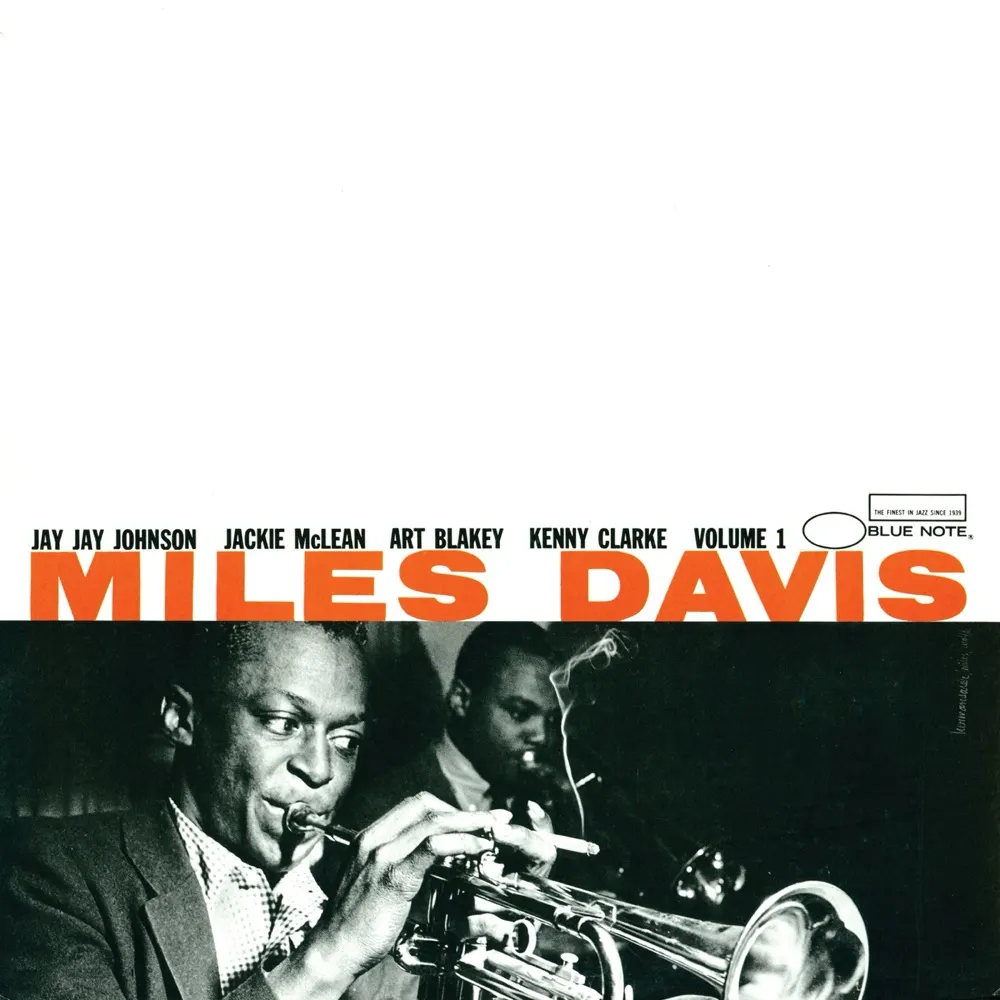
At the end of 1955 the readers of Down Beat voted Miles Davis the top trumpeter in their poll, for the first time. Leonard Feather opens the original notes with that news, then goes back: born in Alton, Illinois, in 1926, raised in East St. Louis, a Juilliard student in 1945, then 52nd Street and the big bands of Billy Eckstine and Benny Carter. Feather's point is that Davis started out in Dizzy Gillespie's shadow and walked out of it.
Today's leader is always yesterday's follower.
Leonard Feather, original liner notes
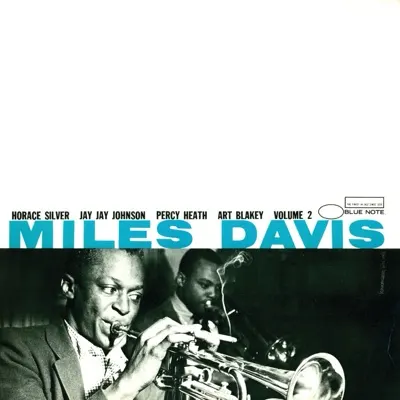
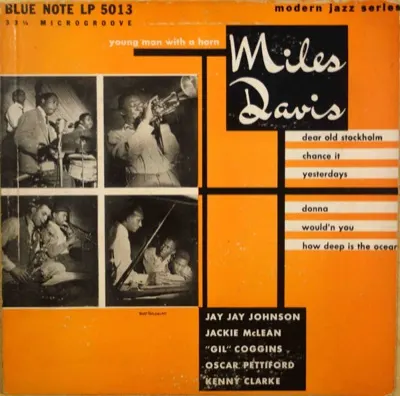
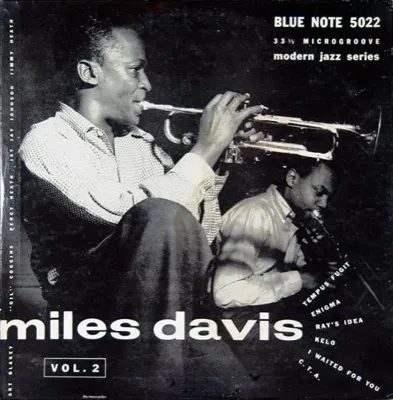
The music here is older than the poll. Blue Note was moving its catalog from 10-inch to 12-inch records, and this LP gathers Davis's first two sessions for the label, which had come out on 10-inch as Young Man with a Horn and Miles Davis, Vol. 2.
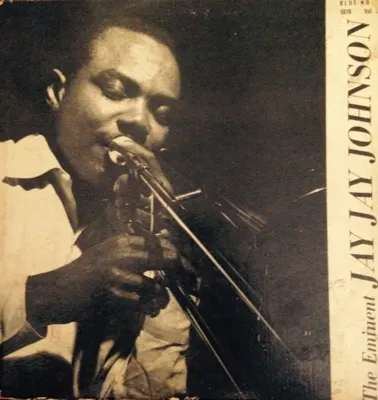
Both dates were at WOR Studios in New York, with Doug Hawkins at the controls and Alfred Lion producing. On May 9, 1952, Davis had J.J. Johnson on trombone, a young Jackie McLean on alto, Gil Coggins on piano, Oscar Pettiford on bass and Kenny Clarke on drums. On April 20, 1953, Johnson and Coggins came back, with Jimmy Heath on tenor, his brother Percy on bass and Art Blakey on drums. The take numbers on both days run into the teens, and Lion kept some of the alternates for this record.
Side one opens with Bud Powell's "Tempus Fugit," then two Johnson tunes, "Kelo" and "Enigma." Billboard, reviewing the LP in 1956, singled out Davis's sensitive horn on "Enigma" and heard "Tempus Fugit" and Jimmy Heath's "C.T.A." as strong performances. Side two starts with the traditional "Dear Old Stockholm" and takes in Pettiford's "Chance It" and McLean's "Donna." "C.T.A." turns up on both sides, in two different takes, and the record closes with an alternate of Gillespie's "Woody'n You," listed in the session books as "Would'n You." Feather heard that tune as proof of how far Davis had come:
That Miles can be so completely Miles that Dizzy's Woody'n You assumes a new and un-Gillespieish coloration in his hands?
Leonard Feather, original liner notes
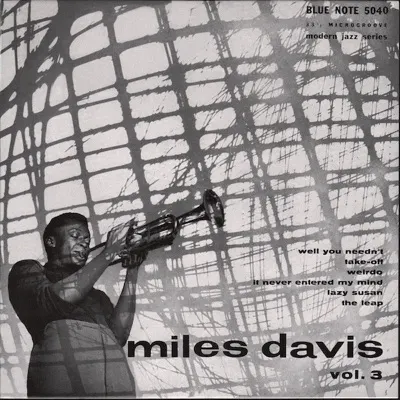
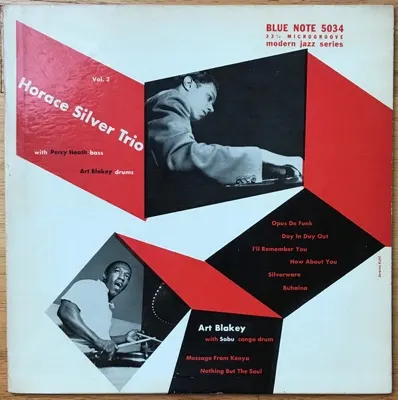
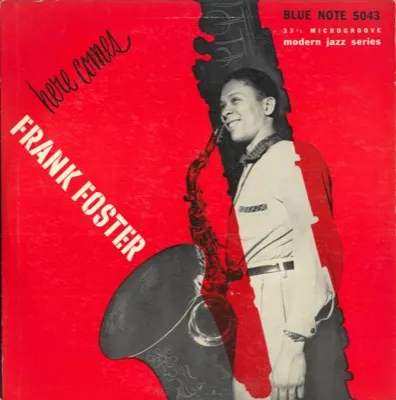
Wikipedia credits the sleeve design to John Hermansader and Reid Miles, with photography by Francis Wolff.
The Jazz Discography Project dates the LP to 1955; Wikipedia gives January 1956, and the Billboard review is from February 1956. Volume 2 followed a month later. When the record reached Britain in 1961, Kennedy Brown of Jazz Journal noted that none of it had been issued there before.
Sources: Leonard Feather, original liner notes, Blue Note BLP 1501 (1956) · Billboard review (February 4, 1956) and Kennedy Brown, Jazz Journal review (August 1961), reprinted on The Jazz Tome · Wikipedia, "Miles Davis Vols. 1 & 2" · Jazz Discography Project (jazzdisco.org), Blue Note sessions of May 9, 1952 and April 20, 1953, via data/blue-note-records.json