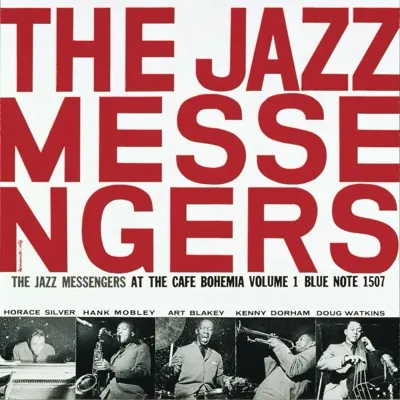
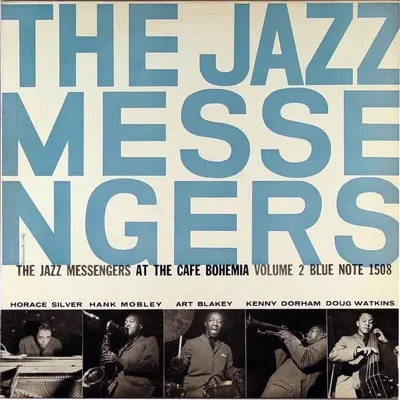
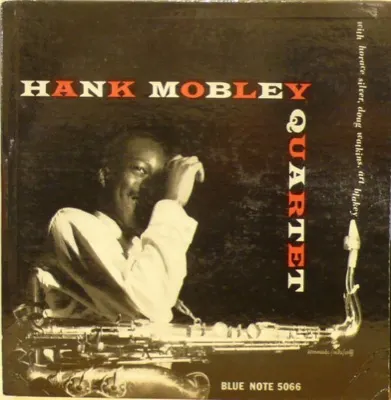
Late in 1954 Horace Silver had a quartet at Minton's Playhouse in Harlem. His trio records for Blue Note had people talking, and Alfred Lion wanted more of him. Ira Gitler, in the original notes, tells how Silver answered: he brought in Kenny Dorham and Art Blakey, and kept two of his Minton's men, Hank Mobley on tenor and Doug Watkins on bass. It was Silver's first time leading a horn band on record. The name on the door was the Jazz Messengers, which Blakey had used before for bigger groups; this band is the one that made it stick.
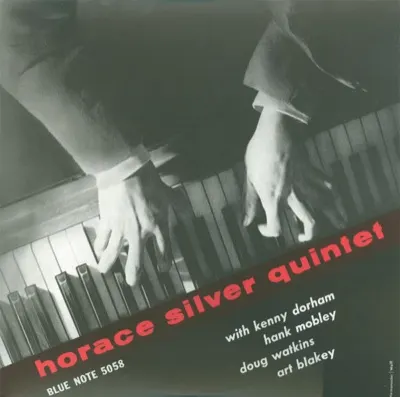
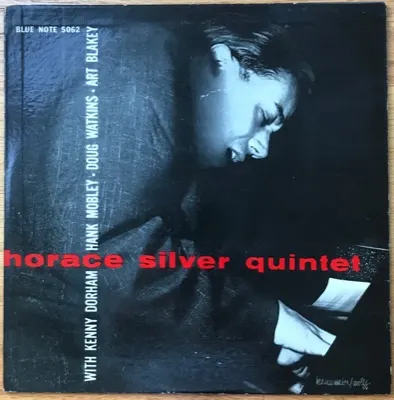
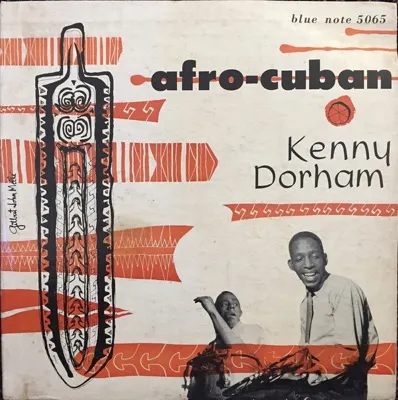
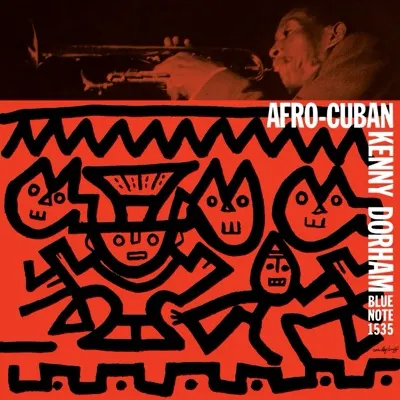
There were two dates, both at Rudy Van Gelder's in Hackensack. The first was November 13, 1954, and gave "Room 608," "Creepin' In," "Doodlin'" and "Stop Time." The second was February 6, 1955, a week after Dorham, Mobley, Silver and Blakey had made the sextet side of Kenny Dorham's Afro-Cuban (BLP 1535). This time Watkins, not Percy Heath, was on bass, and four more tunes came out of the day. Each date first filled a 10-inch LP, BLP 5058 and BLP 5062. Silver wrote seven of the eight; "Hankerin'" is Mobley's.
Side one opens with "Room 608," named for Silver's hotel room: a fast unison theme, then Dorham, Silver and Mobley, and a chorus for Blakey. Next is the slow one.
Creepin' In sets a wonderful minor mood – slow, slinky and funky.
Ira Gitler, original liner notes
"Stop Time" hangs on a short 16-bar theme, and every man takes a turn. Side two has "The Preacher," which Gitler hears as close kin to "I've Been Working on the Railroad." Wikipedia says Lion found it "too old-timey" and nearly left it off, until Silver and Blakey stood up for it. The record ends with "Doodlin'," a blues with the trumpet and tenor moving a whole tone apart in the theme.
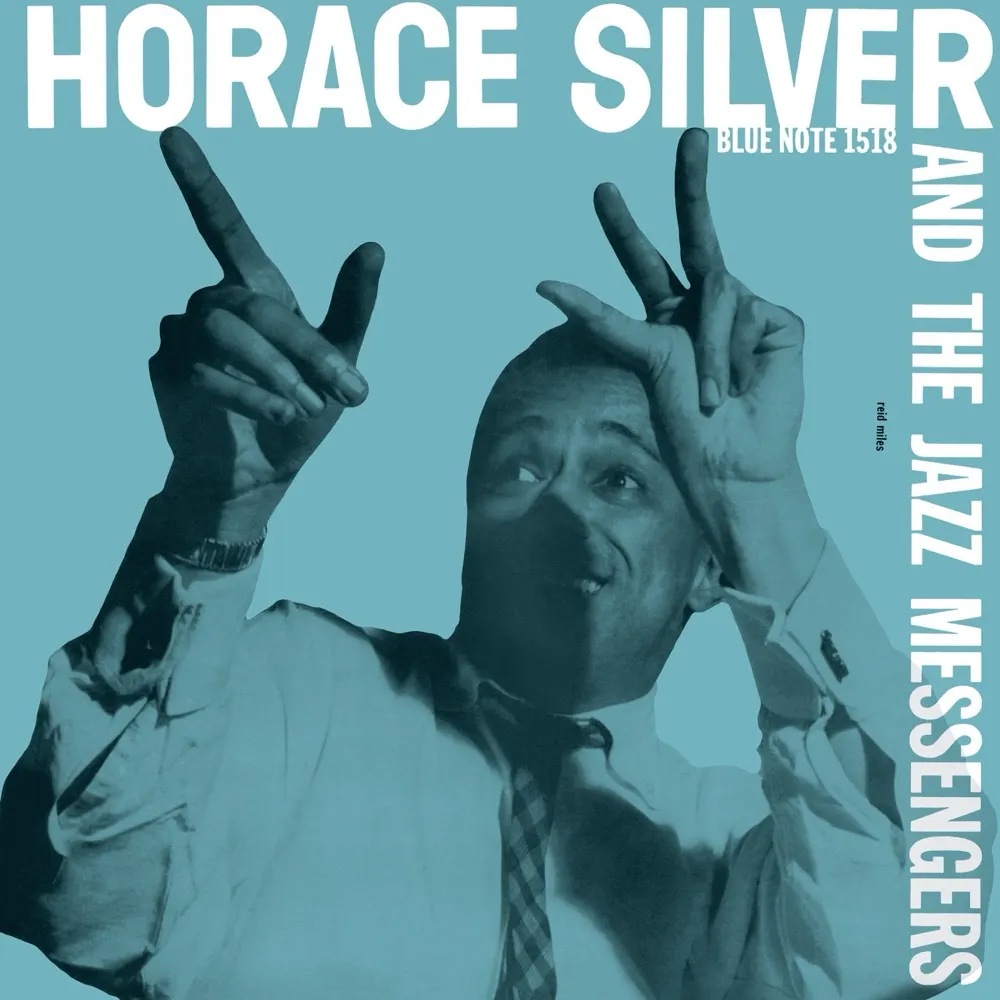
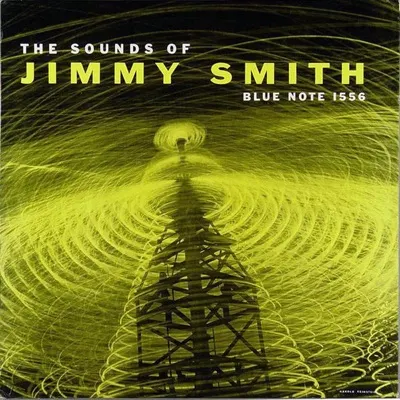
The sleeve is Reid Miles's design around a Francis Wolff photograph.
Gitler thought Dorham had seldom played better. The 12-inch came out in October 1956, and Billboard's review noted that the lineup had changed since. Silver had gone off to lead his own quintet, and Blakey kept the Messengers name. Wikipedia points out that the quintet, two horns and three rhythm, was the shape Silver would keep for most of his career.