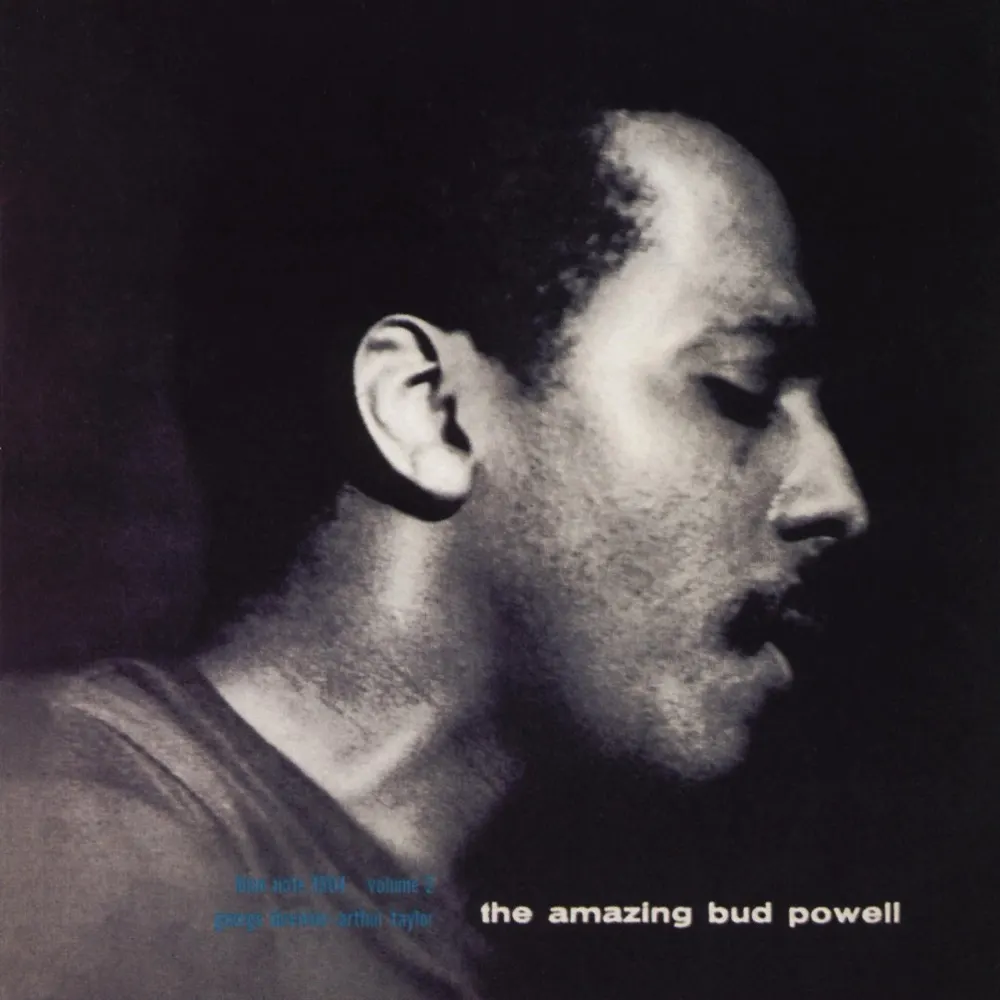
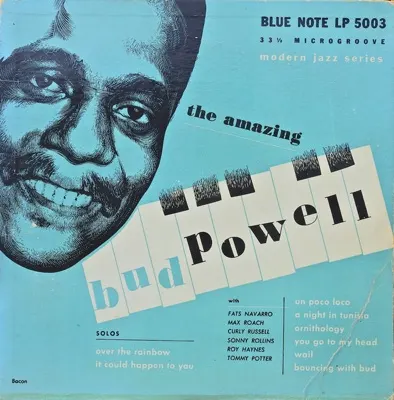
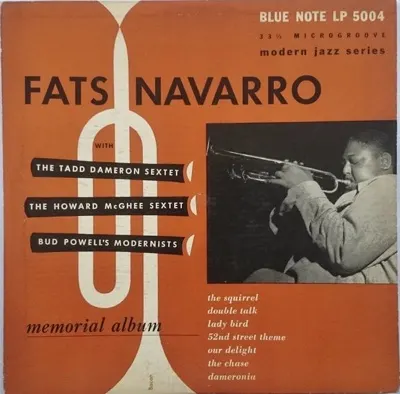
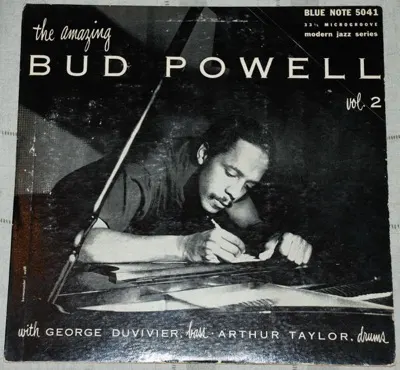
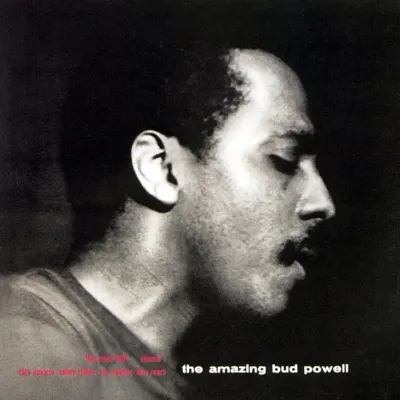
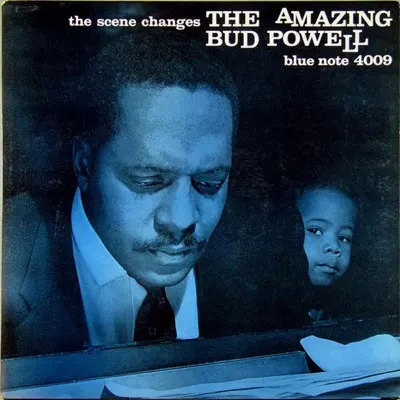
By 1953 Bud Powell had been in and out of hospitals for years, and Leonard Feather, in the original notes, does not hide it. What he stresses is how much music came out between the bad stretches, and that Alfred Lion was there to record it.
Between these covers lies the harvest of a journey through the mind of Bud Powell.
Leonard Feather, original liner notes
The core of the record is one day: August 14, 1953, at WOR Studios in New York, with George Duvivier on bass and Art Taylor on drums. All eight tunes Lion kept from it are here (a ninth, "I've Got You Under My Skin," was rejected); they had first come out on the 10-inch The Amazing Bud Powell, Vol. 2. To fill the 12-inch, Blue Note added four sides from the earlier dates: "You Go to My Head" and a second "Ornithology" from August 9, 1949, and "Over the Rainbow" and "It Could Happen to You" from the trio with Curly Russell and Max Roach on May 1, 1951.
Feather goes through the 1953 tunes one by one. "Reets and I" is built on a theme by "Little Bennie" Harris over the chords of "All God's Children Got Rhythm," and named for Harris and his wife. In "Autumn in New York" Powell overlaps two bars, so the chorus comes out at 31. "Sure Thing," a Jerome Kern song, has Powell's left hand and Duvivier's bass moving together in places. Oscar Pettiford's "Collard Greens and Black-Eyed Peas," also known as "Blues in the Closet," is an ad-lib blues for the trio. On "I Want to Be Happy" Duvivier takes a chorus.
Then there is "The Glass Enclosure." Feather tells how it began: Lion heard Powell play an odd theme one night at his apartment and asked what it was. Powell said he had something in mind he was trying to express. Lion kept asking and kept encouraging him, and by a later visit Powell had worked out the pattern and Duvivier had written down the parts. It moves through four sections in under three minutes.
Glass Enclosure ranks with Un Poco Loco among Bud's greatest.
Leonard Feather, original liner notes
The credits list John Hermansader for design and Francis Wolff for photography.
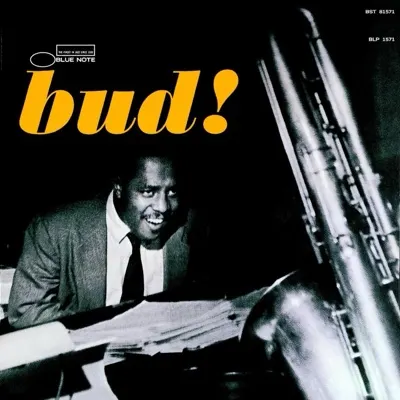
The Jazz Discography Project dates this LP to 1956, matching the Billboard review of May 1956; the 1954 on our page belongs to the 10-inch. Billboard's review described the four added sides as alternate masters, but the Jazz Discography Project lists only the "Ornithology" as an alternate. Powell came back to Blue Note in 1957 and 1958 for BLP 1571 and BLP 1598.
Sources: Leonard Feather, original liner notes, Blue Note BLP 1504 (1956) · Billboard review (May 19, 1956), reprinted on The Jazz Tome · Wikipedia, "The Amazing Bud Powell, Vol. 2" · Wikipedia, "The Amazing Bud Powell" · Jazz Discography Project (jazzdisco.org), Blue Note sessions of August 9, 1949, May 1, 1951 and August 14, 1953, via data/blue-note-records.json