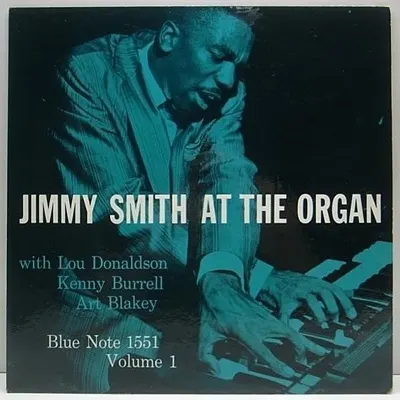
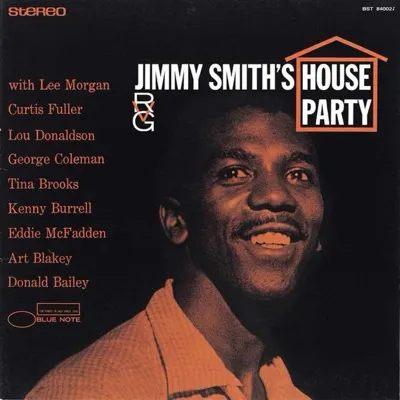
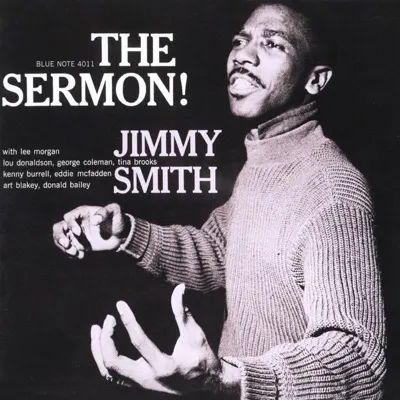
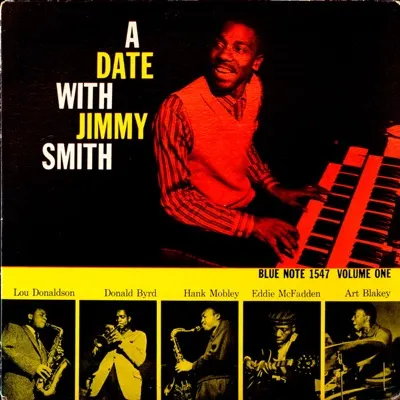
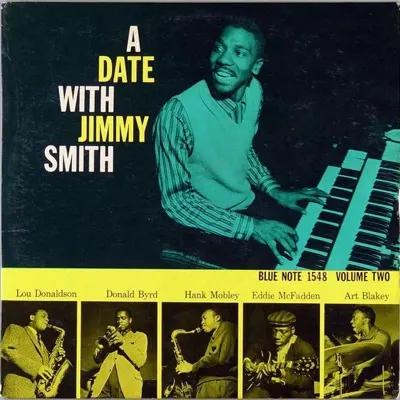
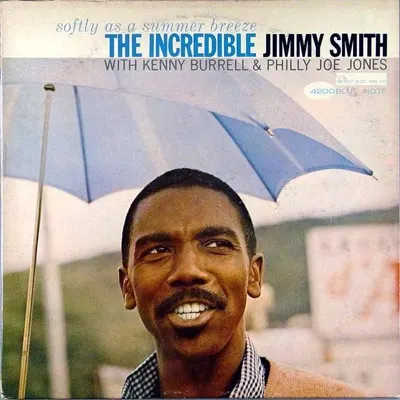
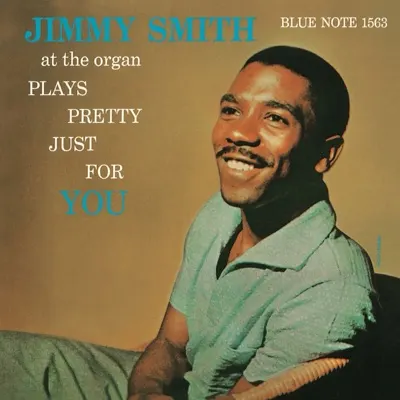
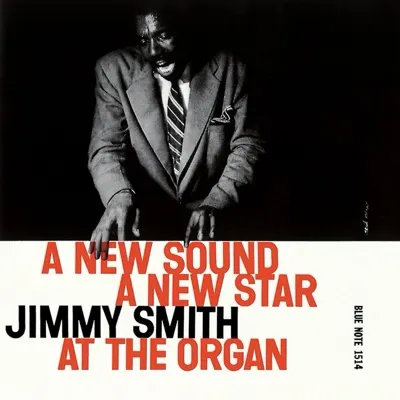
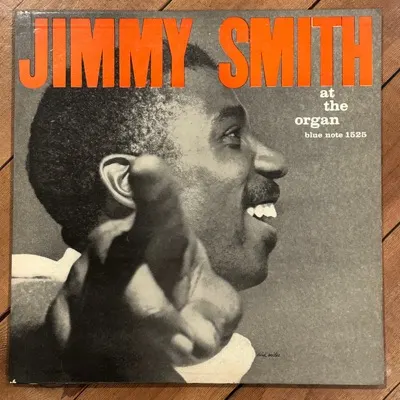
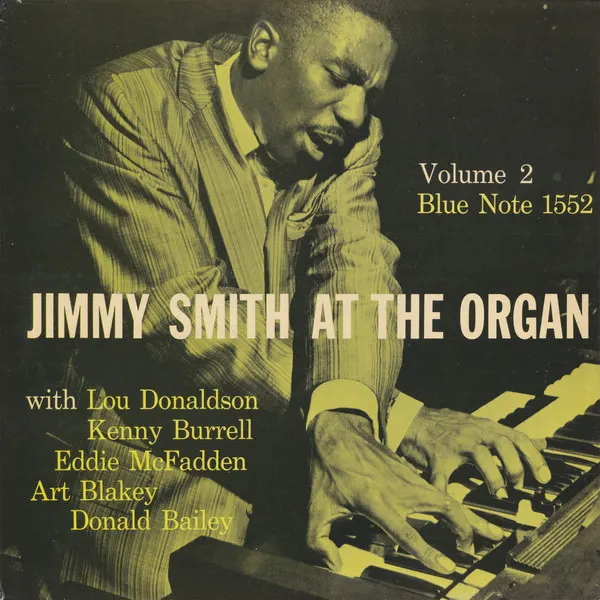
This is the fourth record Blue Note drew from three days with Jimmy Smith at Manhattan Towers in New York, February 11 to 13, 1957. It came out in 1958, a year after the music was made. Robert Levin wrote one set of notes for both At the Organ volumes, and he places Smith with players like Sonny Rollins, Miles Davis, Thelonious Monk and Milt Jackson, modern musicians who kept their roots in the blues. Levin says the sessions were relaxed and informal, the kind Alfred Lion liked to call groovy.
Four bands play on these four tracks. On Tuesday, February 12, Smith recorded with his own trio, Eddie McFadden on guitar and Donald Bailey on drums, and then with Kenny Burrell and Art Blakey, with Lou Donaldson on alto for some of both. On Wednesday, February 13, Smith went back to his trio, and Blakey came in for one tune. Wikipedia has the dates of two tracks the other way round, putting "Plum Nellie" on February 13 and "The Duel" on February 12; we follow the Jazz Discography Project.
Side one opens with "Plum Nellie," Smith's slow blues, with Donaldson, McFadden and Bailey. Bill Coss, in Metronome, singled out McFadden's solo on it. Charlie Parker's "Billie's Bounce" has the Burrell and Blakey band with Donaldson. John A. Tynan, in Down Beat, noted that these two were the only quartet tracks on the record.
Side two opens with the tune the reviewers wrote most about. "The Duel" is Smith and Blakey alone, organ and drums. Levin thought highly of what Smith played on it.
The Duel, an original, is between Art and Jimmy with Jimmy's solo one of his best on record.
Robert Levin, original liner notes
Tynan heard it turn into a free-for-all, and gave the decision to Blakey. The record ends with the trio on "Buns a Plenty," which Levin calls a breezy, middle-tempo blues by Smith. His notes spell it "Burns a Plenty." Tynan found it the most relaxed track of the four.
Levin's notes close on where Smith was headed.
He is a still growing talent and a welcome addition to the "East Coast" school.
Robert Levin, original liner notes
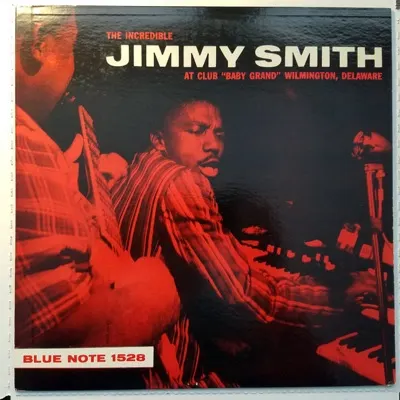
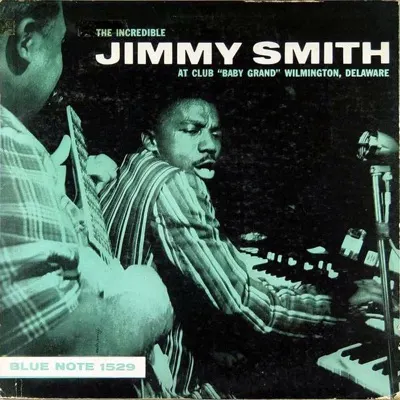
The sleeve was designed by Reid Miles, with a photograph by Francis Wolff.
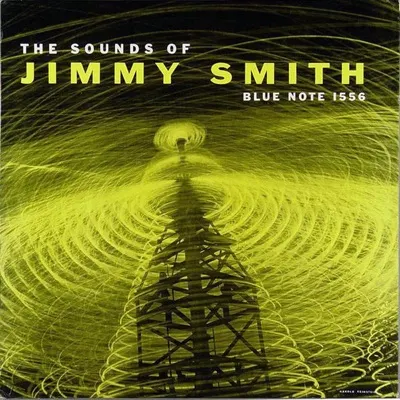
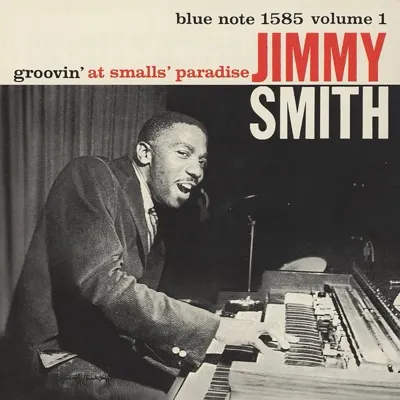
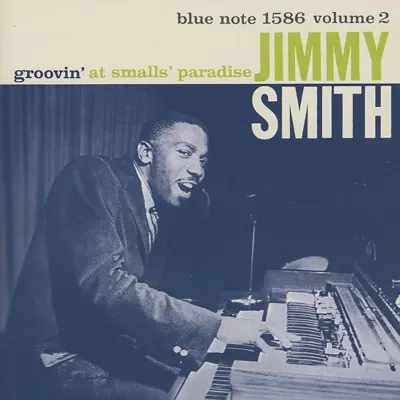
Not everything from the three days was used up. Six more tracks came out in 1959 as The Sounds of Jimmy Smith, and three tunes waited for Mosaic's box in 1994. Smith was back with Bailey and McFadden in May, and in November Blue Note recorded the trio live at Smalls Paradise in Harlem.
 Jimmy Smith – organ
 Lou Donaldson – alto sax
 Kenny Burrell – guitar
 Art Blakey – drums