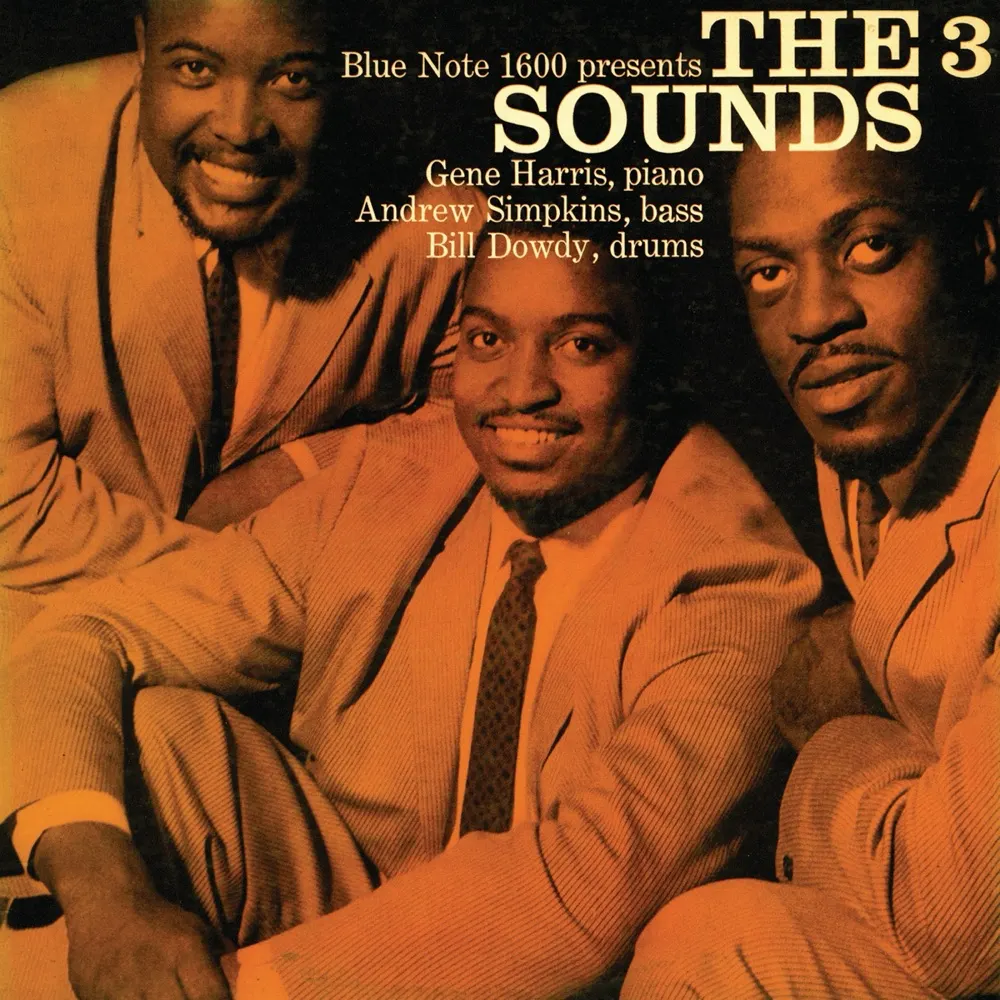
The Three Sounds came to Blue Note almost unknown. Leonard Feather, in the original notes, tells their story. They formed in South Bend in 1956 as a quartet with a tenor player, and became a trio when he left. They worked around Ohio behind Al Hibbler, Lester Young and Sonny Stitt, then spent many months in Washington, at the Spotlight and the Hollywood clubs. In September 1958 they moved to New York and played the Offbeat on upper Broadway, between sets by Stuff Smith. That is where Feather first heard them.
Gene Harris, the pianist, was self-taught. He started on boogie-woogie, then listened to Oscar Peterson and Erroll Garner, and sharpened his reading in an Army band. Andrew Simpkins, the bassist, came from Richmond, Indiana. Bill Dowdy, the drummer, grew up in Benton Harbor, Michigan, where he had a trio with Harris before the Army, and he was also the group's business manager.
There were two dates at Van Gelder's in Hackensack, Tuesday, September 16, and Sunday, September 28, 1958, with Alfred Lion producing. Wikipedia gives the second as September 18; Feather and the session listing have the 28th. They made 17 takes, and eight are on the record, four from each day. On the second date Harris also played celeste.
Side one opens with "Tenderly," with Latin touches and single-note lines from Harris. "Willow Weep for Me" gets a funky treatment. Harris's "Both Sides" is a plain blues on a three-note phrase, with Dowdy's sticks in a parade feel. "Blue Bells" brings in the celeste and Simpkins's first solo. On side two, "Goin' Home" opens on celeste. Then comes Dizzy Gillespie's tune from the early 1940s.
originally named for Woody Herman but, ironically, never recorded by him
Leonard Feather, original liner notes
On "Woody 'n' You" Harris and Dowdy trade fours, and Dowdy takes a long solo. "'O Sole Mio" closes the record, the old melodies played for laughs against a Latin blues. Feather heard three players as one.
a unity, a One Sound, from which a great deal more will soon be heard
Leonard Feather, original liner notes
The sleeve is Reid Miles's design, with photography by Francis Wolff.
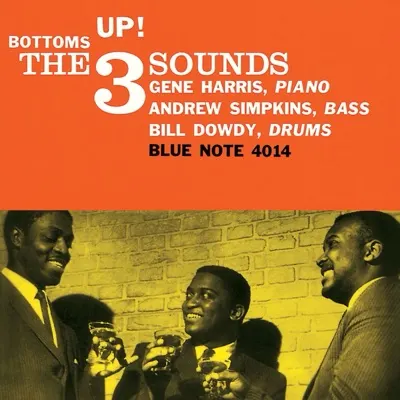
Not everyone agreed. John A. Tynan gave it no stars in Down Beat and called it "one of the worst jazz albums in years." The trio was back at Van Gelder's in February 1959 for Bottoms Up!, and made several more dates for Blue Note that year. As Wikipedia notes, BLP 1600 was the last number in this run; the label's next records started the 4000 series.